The Complete Guide to
Travel for Personal Growth
Not all travel is the same.
There's tourism, which involves moving through beautiful places with a camera and a checklist. There's vacation, which is rest and pleasure and an escape from ordinary life — and which has real value. And then there's something else: a kind of travel that doesn't just refresh you but changes you. Travel that confronts your assumptions, reshapes your sense of what's possible, and returns you to your ordinary life as a subtly or dramatically different person.
This guide is about the second kind — transformational travel, travel for self-discovery. It explores what makes certain journeys genuinely growth-producing, how to design travel experiences with personal development in mind, and how to integrate what you experience abroad into lasting change at home.
Why Travel Has the Potential to Change You
The transformational potential of travel isn't mystical. It's rooted in well-understood psychological and neurological processes that certain kinds of travel activate particularly well.
Disruption of Automatic Behavior
Most of ordinary life is conducted on autopilot. Travel disrupts this. In an unfamiliar environment, nothing is automatic — you have to pay attention to where you're going, how things work, what people are saying. This heightened attention has a side effect: you're more awake. You notice more. You're more fully present because the environment is demanding your presence.
Perspective Shift
When you observe how other people live, what they value, and how they organize their societies, your own assumptions become visible for the first time. This is the fish-in-water problem: travel drops you into a different body of water, and suddenly the water you came from becomes visible. The things you took for granted reveal themselves as choices — one way among many ways of doing and being.
Identity Flexibility
In your home environment, you are who everyone expects you to be. Among strangers who have no preexisting model of you, you have unusual latitude to be different — to try on unfamiliar ways of presenting yourself, to discover aspects of yourself that your ordinary environment suppresses. Many people report that travel introduced them to aspects of themselves they subsequently brought home.
Confrontation with Uncertainty
Transformational travel inevitably involves uncertainty — the language you don't speak, the situation that doesn't resolve the way you expected. This is uncomfortable, and it's also exactly where growth happens. Repeated confrontation with uncertainty — and coming through it — builds a demonstrated evidence base for what you're capable of.
The Difference Between Tourism and Transformational Travel
Not all travel activates these growth mechanisms equally. Tourism — moving through beautiful places in a comfortable, controlled, pre-packaged way — is enjoyable, but it tends not to be deeply transformative. It keeps you at a pleasant distance from the foreign rather than inviting genuine contact with it.
Transformational travel involves some combination of the following:
Genuine engagement with local culture
Not observing people through glass but actually interacting with them, learning something of their language, eating where they eat, spending time in non-tourist spaces.
Time enough for depth
Genuine transformation requires enough time for the novelty to settle and patterns to emerge — for you to stop being a tourist and start being a temporary resident. The minimum tends to be measured in weeks rather than days.
Some degree of discomfort
Not suffering for its own sake, but the willingness to leave the zone of comfort and familiarity. Taking public transportation. Getting genuinely lost. Eating things you're uncertain about.
Intentionality
Going with some sense of what you're looking for, what questions you want the experience to engage, what you're trying to learn or work through.
Solitude
Not exclusively, but enough to actually process what you're experiencing rather than just accumulating experiences that you narrate to others in real time.
"The traveler who returns home genuinely changed is not the one who saw the most places or took the most photos."
Types of Transformational Travel
Solo Travel
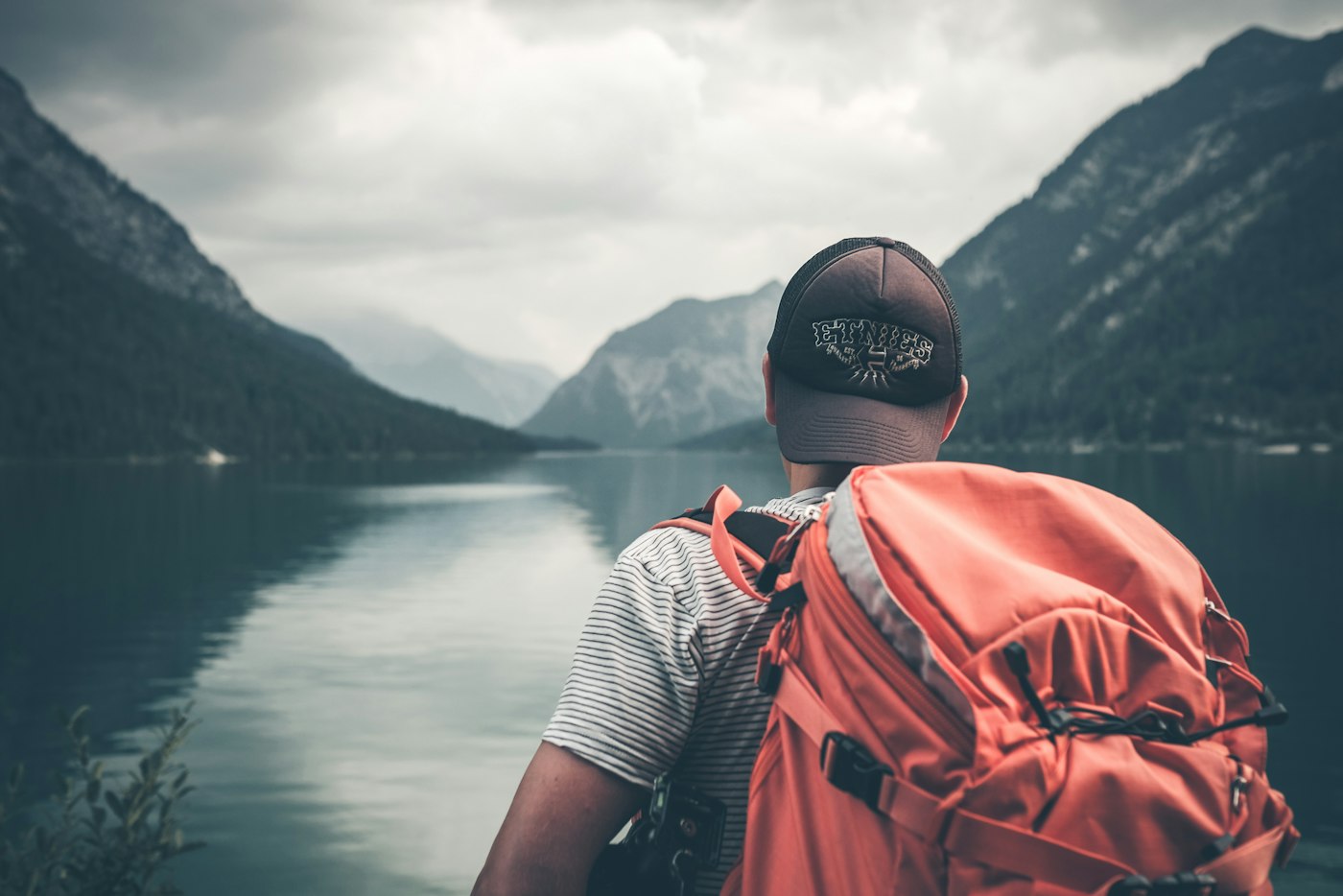
Perhaps the most consistently transformational kind of travel, because it removes the social buffer that group travel provides. Solo travel forces self-reliance in a way that's both challenging and deeply confidence-building. It also creates genuine openness to encounter — with other travelers, with local people, with yourself. When there's no one to talk to, you think more, notice more, and are available to connections that would never have happened otherwise.
Slow Travel
The antidote to the "fifteen countries in three weeks" approach. Staying somewhere for a month or more shifts the experience — the place stops being a set of sights to see and becomes something more like a temporary home. You develop routines, recognize faces, and begin to understand the rhythms of daily life rather than just observing them from a tourist's distance.
Volunteering and Service Travel
When done thoughtfully — with genuine skills to offer, in partnership with local organizations, for long enough to make a real contribution — service travel can be among the most meaningful and growth-producing travel experiences possible. The key questions: Is the organization locally led and trusted? Do I have skills they actually need? Am I approaching this with humility rather than savior mentality?
Pilgrimage and Contemplative Travel
Extended walking journeys have a long history as contemplative practice. There is something about physical movement through landscape, with no technology or distraction available, that creates unusual conditions for reflection, insight, and inner shift. Many people who have walked the Camino de Santiago report that the journey was less about the destination than about who they became over the weeks of walking.
Intentional Retreat and Immersion
Retreats — meditation retreats, writing retreats, yoga teacher trainings, wilderness programs — offer a concentrated version of the transformational conditions that travel provides. Concentrated, focused time in a different context with a developmental intention produces change that would take much longer in the ordinary course of life.
Designing Travel for Self-Discovery
The most transformative travel isn't accidental. It's designed. Here's how to approach it.

Start With Questions
Before you book anything, identify what you're bringing to the journey. What are you trying to figure out? What have you been avoiding that travel might help you face? What kind of person do you want to become?
Choose the Right Destination
Different destinations activate different aspects of development. An artistic city feeds creativity. A developing country challenges assumptions. A contemplative tradition supports inner work. A physical challenge builds resilience.
Build in Space for Integration
Build in blank days. Take mornings for journaling. Spend afternoons in cafes watching the world go by. The empty space is where transformation often happens.
Travel Slowly Enough to Arrive
There's a saying among long-term travelers: it takes about two weeks to stop being a tourist. Build enough time into your travel that you have the experience of actually arriving — feeling, even briefly, like a temporary resident.
Journal With Intention
Write about what you observe, but don't stop there. Write about what it makes you think, what it calls into question, what it reveals about your own assumptions, what it makes you want in your own life.
Integrating What You Learn: Bringing It Home
Perhaps the most underexplored aspect of transformational travel is what happens when you return. Travel that changes you in one environment but leaves you unchanged at home is only half a transformation.

The Re-entry Challenge
Coming home after significant travel is often harder than the travel itself. The insights and sense of possibility that felt vivid abroad can begin to fade under the weight of ordinary life. The old patterns and environments begin to reassert themselves. This is normal — it means that integration is a project, not an automatic process.
What Integration Requires
Articulation
Find language for what you experienced and what it meant. Talk about it with people who are genuinely curious. Write about it. The act of putting words to experience consolidates it.
Specific commitments
Vague intentions don't produce change. Specific behavioral commitments do: "I'm going to cook one new cuisine every week," "I'm going to learn conversational Spanish," "I'm going to spend one morning a week in a café without my phone."
Environmental redesign
If your home environment is identical to what it was before you left, it will exert the same pull on your behavior. Bring physical reminders of your travel into your environment — objects, images, music, food, practices that keep the experience alive.
Community connection
Seek out communities connected to what you experienced — language groups, cultural organizations, people from the places you visited. These connections keep the experience alive and create ongoing context for the change you're trying to maintain.
The Deeper Purpose of Travel for Self-Discovery
At its best, transformational travel doesn't just show you the world. It shows you yourself — reflected in the mirror of difference. The places you visit, the people you encounter, the discomforts you navigate, the unexpected moments of beauty and connection and confusion — all of these are occasions for learning something true about who you are, what you value, what you're afraid of, and what you're capable of.
Travel doesn't create growth automatically. But it creates conditions — disruption, novelty, discomfort, freedom, encounter, perspective — in which growth becomes not just possible but almost inevitable, if you approach it with intention.
"The deepest value of travel for self-discovery is not what you see. It's what it reveals about you."
Planning Your Transformational Journey: Practical Starting Points
For solo travel beginners
Start with a 1–2 week solo trip to a destination that feels moderately challenging — not a familiar resort, but somewhere navigable. Portugal, Japan, Costa Rica, and New Zealand offer low language barriers, good infrastructure, and enough novelty to stretch you.
For those seeking perspective shift
Visit a place where the daily realities of life are very different from your own — a developing country, a region with very different cultural or religious values. Approach as a learner, not a tourist.
For inner work
Consider a structured retreat: a meditation retreat, a therapeutic wilderness program, a silent retreat, or a pilgrimage walk. The Camino de Santiago (2–6 weeks), a vipassana retreat (10 days, free or donation-based), or a wilderness therapy program are all established options.
For skill building and confidence
Seek experiences that require you to operate at the edge of your capabilities: language immersion programs, sailing courses, high-altitude trekking, or learning a craft from a master practitioner in their home country.

Key Takeaways
- Transformational travel differs from tourism in its depth of engagement, intentionality, discomfort tolerance, and time investment.
- Travel changes us through disruption of automatic behavior, perspective shift, identity flexibility, and confrontation with uncertainty.
- Solo travel, slow travel, service travel, pilgrimage, and intentional retreats each offer distinct developmental opportunities.
- Design your travel with specific questions and intentions, not just destinations.
- Build space for integration — blank days, journaling, reflection — into your itinerary.
- Bringing the transformation home requires articulation, specific behavioral commitments, environmental changes, and community connection.
- The deepest value of travel for self-discovery is not what you see, but what it reveals about you.
Ready to Plan Your Journey?
We curate transformational travel experiences for professionals over 40. Let's design something extraordinary together.
Explore the Full Picture
Travel is one doorway into growth. Explore our companion cornerstone guides for the work you do at home.